
Fields in Lafayette Tax Records
Lafayette County property tax records live in two linked systems. Tri-State assessment results supply the parcel and value context, while the tax search carries the tax due along with the searchable ownership keys. The two offices share one address but perform different duties.
| Field | What It Shows | Where |
|---|---|---|
| PPIN / PARID | Keys the correct tax parcel | Assessment and tax search |
| Appraised value | Assessor's full-value basis | Assessor record |
| Assessed value | Ratio-based taxable value | Assessor record |
| Tax components | County, city, and state amounts | Tri-State data |
| TAX DUE | Amount shown as due | Tax Collector search |
Homestead property gets a 10 percent ratio of appraised value. The normal Lafayette County ratio is 15 percent. Those are assessment ratios, not tax rates, so tax due, assessed value, appraised value, and sale consideration remain four different numbers.
Search Lafayette Tax Due
Use one key at a time. The Tri-State tax search accepts PPIN, PARID, owner, and address routes, and each Lafayette County parcel should be matched back to its assessment record.
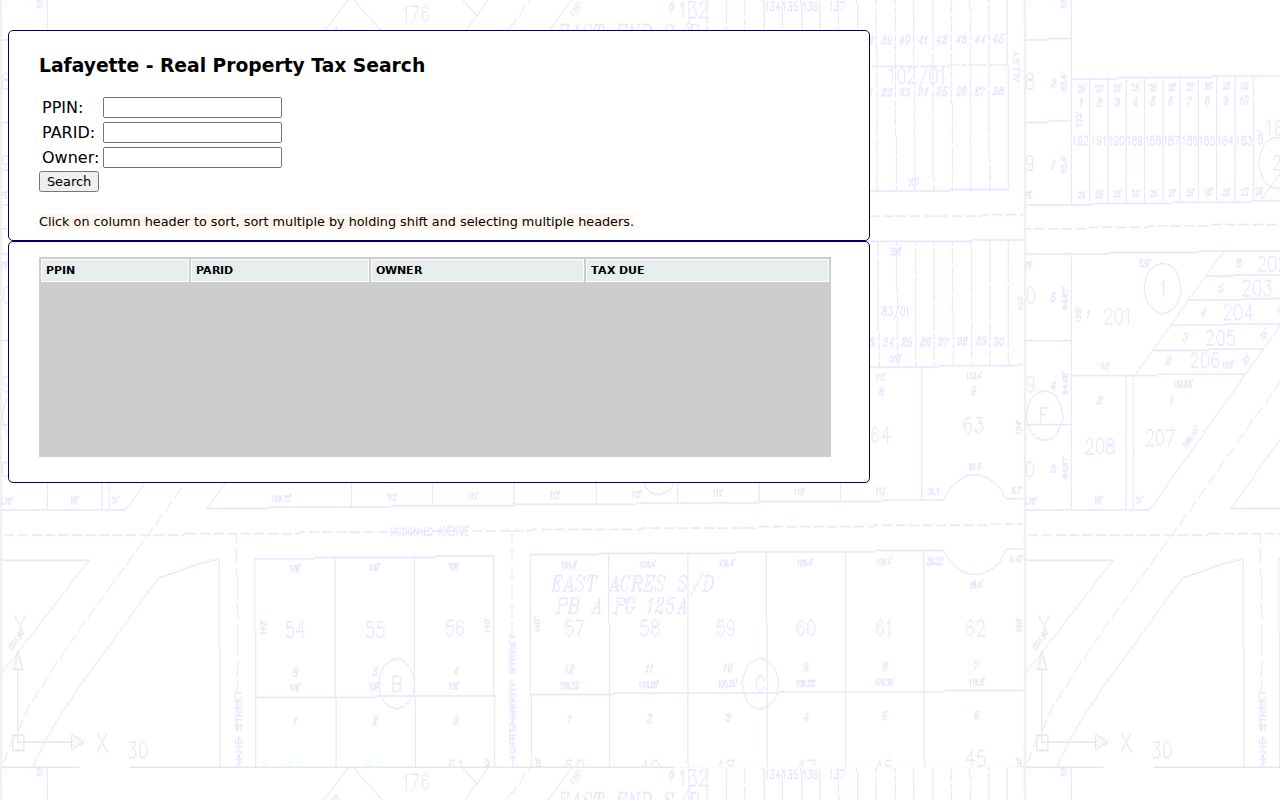
A tax row alone proves neither title nor current market worth.
Lafayette Assessment Ratios Explained
Mississippi assessment sets a ratio between appraised and assessed value. Lafayette County lists 10 percent for qualifying owner-occupied single-family homestead property. The normal ratio is 15 percent. The ratio is not the whole story. Taxing districts and levies still shape the bill. The county assessor and collector page gives the January 1 appraisal date along with local context.

The county explanation distinguishes a valuation ratio from the tax calculation and payment status.
Lafayette Homestead Record Requirements
Lafayette County accepts homestead applications from January 2 through April 1, and the paperwork is specific. The instructions call for the warranty deed, settlement statement, Social Security numbers for the owner and spouse, and vehicle-tag details. Status changes can require an update. The homestead procedure shows the documents and filing window.
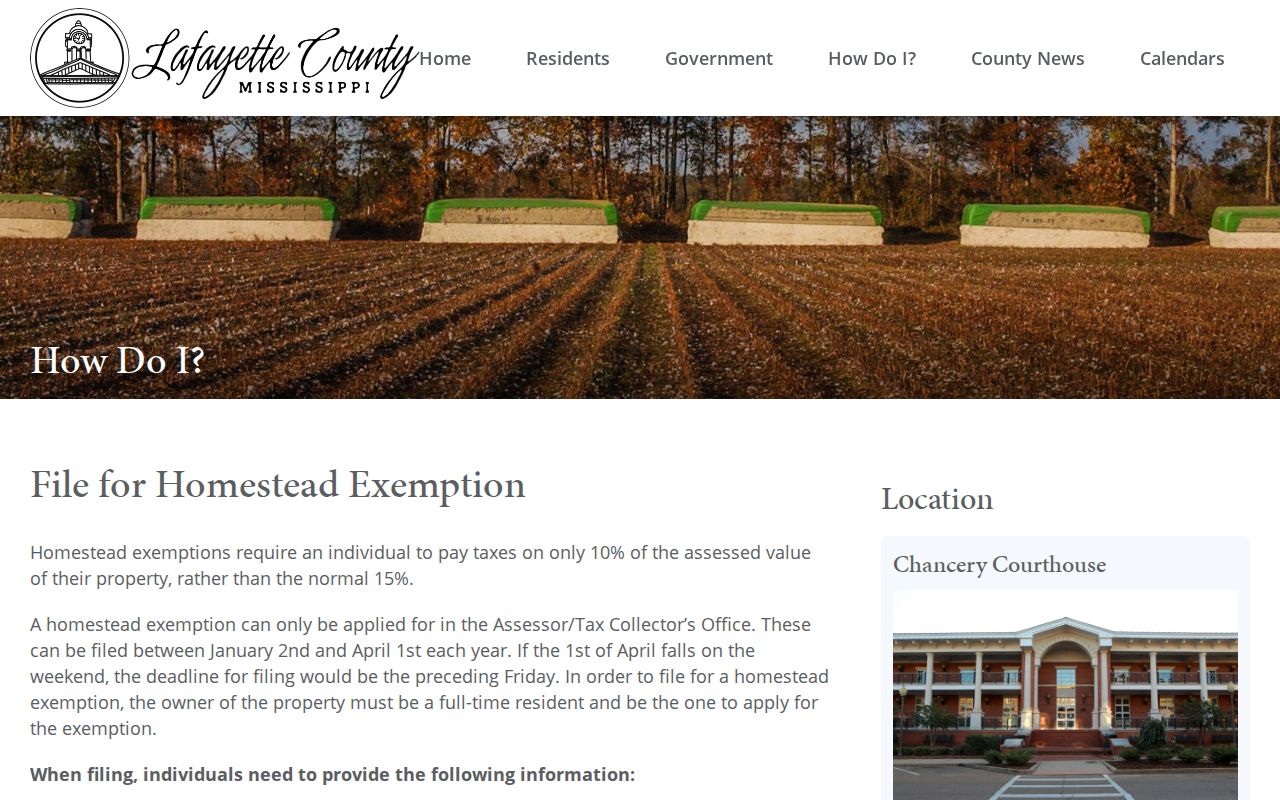
An application alone is not approval. The application route supports the filing, but the assessment result must still show how the parcel was treated. Read exemption status together with the tax year. When the public record does not match the decision, contact the assessor.
Check a Lafayette Tax Bill
Start with a verified parcel key. A name or address can locate candidates, but PPIN or PARID keeps assessment, tax, and GIS rows aligned, and saving the year and date viewed helps later.
- Search Tri-State tax by PPIN or PARID, then owner or address if needed.
- Read TAX DUE, tax year, owner, and parcel data without treating the row as title proof.
- Open assessment records for appraised value, assessed value, and exemption context.
- For delinquency, check the collector plus Chancery redemption and land records.
- Assessed value
- The ratio-based portion used in the tax process.
- Levy
- A rate imposed by a taxing authority.
- Homestead exemption
- Qualifying owner-occupied relief.
- Tax lien
- A claim tied to unpaid tax that needs current confirmation.
The current Tri-State shell identifies effective year 2026, while the assessor uses a January 1 appraisal date. A recent deed may appear on a different schedule from the tax row. Record the source date and do not use the tax owner as sole title proof.
Payment questions belong with the Tax Collector at 300 N Lamar Boulevard, Suite 103, Oxford, phone 662-234-6006. Valuation and exemption questions belong with the Tax Assessor at the same suite, phone 662-234-5562.
Lafayette Tax Sale Is Distinct
Lafayette County runs its tax sale through GovEase. Bidding opens the last Monday in August and runs 8:30 a.m. to 4:30 p.m. daily until the parcels sell. Registration demands a tax ID or Social Security number. Bidders also supply a W-9, payment information, and a maximum bid, and no registration fee is listed. Redemption starts at the opening amount plus interest. The county requires a two-year step before a tax deed may be acquired if no redemption occurs. The official instructions show the route. A bidder is not an unquestioned clear-title owner, so confirm current notice, title, and fee rules.

A sale entry alone settles nothing. Current status calls for tax, redemption, and land-record checks. Notices run twice each August in the Oxford Eagle. The county says a list can be purchased from Delta, though no stable complete endpoint is published online. Save the parcel, legal description, tax year, delinquent sum, sale status, and redemption status. Distressed transfers differ from ordinary market evidence. Foreclosure, short sale, auction, bank-owned, and bankruptcy transactions can explain a record change, yet the county's own appeal guidance treats them as poor normal comparables.
Appeal Lafayette Assessed Value
Start with an informal Tax Assessor review. Ask for the property card and the valuation method. Bring parcel facts and sound comparable sales. The Lafayette County roll is presented the first Monday in July and stays open during that month. The first Monday in August is the appeal deadline. Values and appeals finalize on the third Monday in August, so confirm each tax year's dates. The county frames the appeal around value fairness and accuracy, not ability to pay, and it rejects foreclosure, short sale, auction, bank-owned, bankruptcy, and other distressed sales as ordinary-value comparables.
Appeal window. Start with the assessor, then file with the Board of Supervisors by the first Monday in August after confirming the calendar.
The appeal procedure provides the local evidence path.

An actual appeal follows the current roll, the notice, and the Board schedule. Those documents control. Missing online fields are no barrier. The county's request form works in person, by mail, or by email. Lafayette charges $0.25 per page plus staff time, with a stated seven-day response period. Mississippi law allows recovery of actual search, review, copying, and mailing costs. Historic tax research opens other doors. University of Mississippi land and assessment volumes run from 1880 to 1951. MDAH and Mississippi State hold further tax-roll references. Confirm custody and format first. An image may not sit online at all.
The tax estimator helps, within strict limits. It asks for a district, a fair-market-value input, and homestead status. The user supplies the value and district choices. The output is therefore an estimate rather than the parcel's official assessment or bill. It is not a recorded sale price, an appraisal, or proof of tax due in the collector system. Ownership and tax status also move on separate tracks. The ArcGIS parcel layer exposes owner, value, tax year, and tax-status fields. The assessment result can include deed book and page. Those links help cross-check a parcel. Even so, a paid bill does not prove clear title, and a delinquent bill or auction listing does not show the assessed owner lost title.
For a disputed payment, save the transaction confirmation, parcel keys, tax year, amount, and date. Call the published collector number. Never send funds through an unverified link. For a disputed value, keep the property card, land and improvement figures, valuation method, and valid comparables. Keeping those two evidence sets apart sends each issue to the right office. Mississippi's public-record rules can help here. They reach an existing tax document, though protected personal tax information stays subject to exemptions. Request narrowly. Ask for a parcel-specific bill, roll entry, receipt, sale notice, or redemption instrument with a narrow date range. The custodian can state the available format, redactions, and actual cost, and a general request should not demand a new countywide analysis. The digital routes carry limits too. Tri-State's Lafayette shell identifies effective year 2026. It links assessment, tax, maps, the estimator, homestead information, and tax-sale resources. That label does not mean every parcel fact was newly entered in 2026. Delta separately warns that frequent uploads may lag courthouse activity. Save the portal date, tax year, and appraisal date. Add any deed date that could explain a mismatch.
Tax-sale research must follow the parcel beyond the auction page. Check TAX DUE and tax status first. Then preserve the advertised owner, legal description, opening amount, costs, sale date, purchaser status, and redemption information. The county states that overbids go to the general fund, and cashier's check, check, and money order appear among the listed payment methods. Those process details do not establish that a purchaser completed redemption notices, received a tax deed, or resolved later title issues. State-forfeited land is a different route. Lafayette County directs those inquiries to the Mississippi Public Lands Division and publishes the state contact numbers in its sale guidance. A parcel in that process is not an ordinary county tax-sale offering, so confirm the current state inventory, acquisition status, and land record before concluding anything. Appeal evidence should be tied to the subject parcel and valuation date. The county recommends reviewing the property card, how value was reached, and valid comparable sales. Document acreage, property traits, and any factual error. Record the land and improvement values as well. List the comparables you used and explain why each one is similar. Mark distressed transactions and exclude them where county guidance says they do not represent ordinary market value.